
Commercial LED Lighting Design Built Around the Space
Creative Lighting helps businesses plan LED lighting systems around the building, the work, the customer experience and the long-term operating goals. From our Plainview, New York base, we support commercial lighting design projects across Long Island, New York, Naples and Southwest Florida, and nationwide.
The Best Fixture Is the One That Works in the Actual Building
Commercial LED lighting design is the discipline of deciding what the space needs before deciding what goes in the box.
A fixture can have excellent specifications and still be wrong for a project. Ceiling height, room geometry, mounting location, surface colors, shelving, equipment, windows, work tasks, customer sightlines, operating hours and maintenance access all affect how a lighting system performs after installation. That is why Creative Lighting starts with the environment and the objective rather than treating design as an afterthought to product selection.
For an office, the goal may be comfortable illumination, clean architectural lines and reduced glare across screens and work surfaces. A dealership needs visual sparkle without turning polished paint and glass into a field of distracting reflections. A warehouse needs dependable illumination through aisles, racks, loading zones and work areas. Retail, restaurants, salons and hospitality spaces add another layer because lighting is part of the brand experience. Exterior sites require attention to coverage, boundaries, pedestrian areas, mounting heights and nighttime visibility.
Creative Lighting can help translate those real-world conditions into a practical lighting plan. Depending on the project, that may include fixture families, lumen output, distribution patterns, spacing, color quality, controls, dimming, photometric information, replacement strategy and coordination with the electrical contractor or project team. The purpose is simple: make the final installation perform as a system instead of as a collection of individually impressive fixtures.
If you are still deciding whether the project needs a retrofit, a layout change or a complete redesign, start with our commercial lighting consultation. For broader product and application guidance, visit our commercial LED lighting page.
Six Decisions That Shape the Finished Lighting System
Good commercial lighting design balances visual performance, appearance, controls, energy use, maintenance and budget. Pretending one number solves all six would certainly make the proposal shorter, but not the project better.
Light Level & Distribution
How much light reaches the useful surfaces matters, but so does where it lands. Fixture output, optics, mounting height, spacing and room geometry influence useful illumination and dark or overly bright areas.
Uniformity & Visual Comfort
Average light levels do not tell the entire story. A space can meet an average target yet still feel inconsistent. Design should consider brightness transitions, glare, shadows and how users move through the environment.
Color Quality & Appearance
Color temperature and color rendering affect merchandise, finishes, vehicles, food, skin tones and the overall character of a room. The right choice depends on the commercial environment, not on a universal preference.
Controls & Operating Strategy
Occupancy sensing, daylight response, scheduling, zoning and dimming can make a well-designed LED system more responsive. Controls should be planned with the lighting, not stapled onto the project after fixture selection.
Maintenance & Serviceability
Fixture access, driver replacement, mounting conditions, product continuity and manufacturer support can matter as much as day-one appearance. A commercial system should be maintainable after the ribbon cutting.
Energy & Project Economics
Efficiency comes from the complete system: appropriate wattage, optics, fixture count, controls and operating schedule. Savings should be estimated from the actual existing and proposed conditions rather than generic claims.
From Existing Conditions to a Buildable Lighting Plan
The exact scope changes by project, but the logic stays consistent: understand the site, define the objective, compare the right options and coordinate the result.
Review the Space
We start with the building type, dimensions, ceiling or pole heights, current lighting, operating conditions, known problems, photographs and available plans. For an existing facility, the old system tells us what should not simply be repeated.
Define Performance Goals
We identify what success means: improved visibility, stronger uniformity, a cleaner customer experience, better task lighting, reduced maintenance, lower connected load, upgraded controls or a combination of those priorities.
Develop the Lighting Approach
Fixture type, mounting, distribution, spacing, color characteristics, controls and architectural integration are considered as one system. Where appropriate, photometric information can support layout and performance decisions.
Compare Products & Tradeoffs
We compare suitable product options in context, including output, optics, warranty, lead time, controls compatibility, support, serviceability and price. The cheapest fixture is not economical when it creates a second project.
Coordinate With the Project Team
Lighting information can be shared with the owner, electrician, contractor, architect, facility manager or other project professionals so the selected products and design intent survive the move from planning to installation.
Refine for the Real Site
Renovations discover things. New construction changes. Existing electrical conditions matter. The design should be adjusted when verified field conditions or project decisions require it instead of pretending the first draft is sacred.
Different Commercial Spaces Need Different Lighting Priorities
Commercial LED lighting design should respond to the environment, because a showroom, warehouse and parking lot are not the same room wearing different shoes.
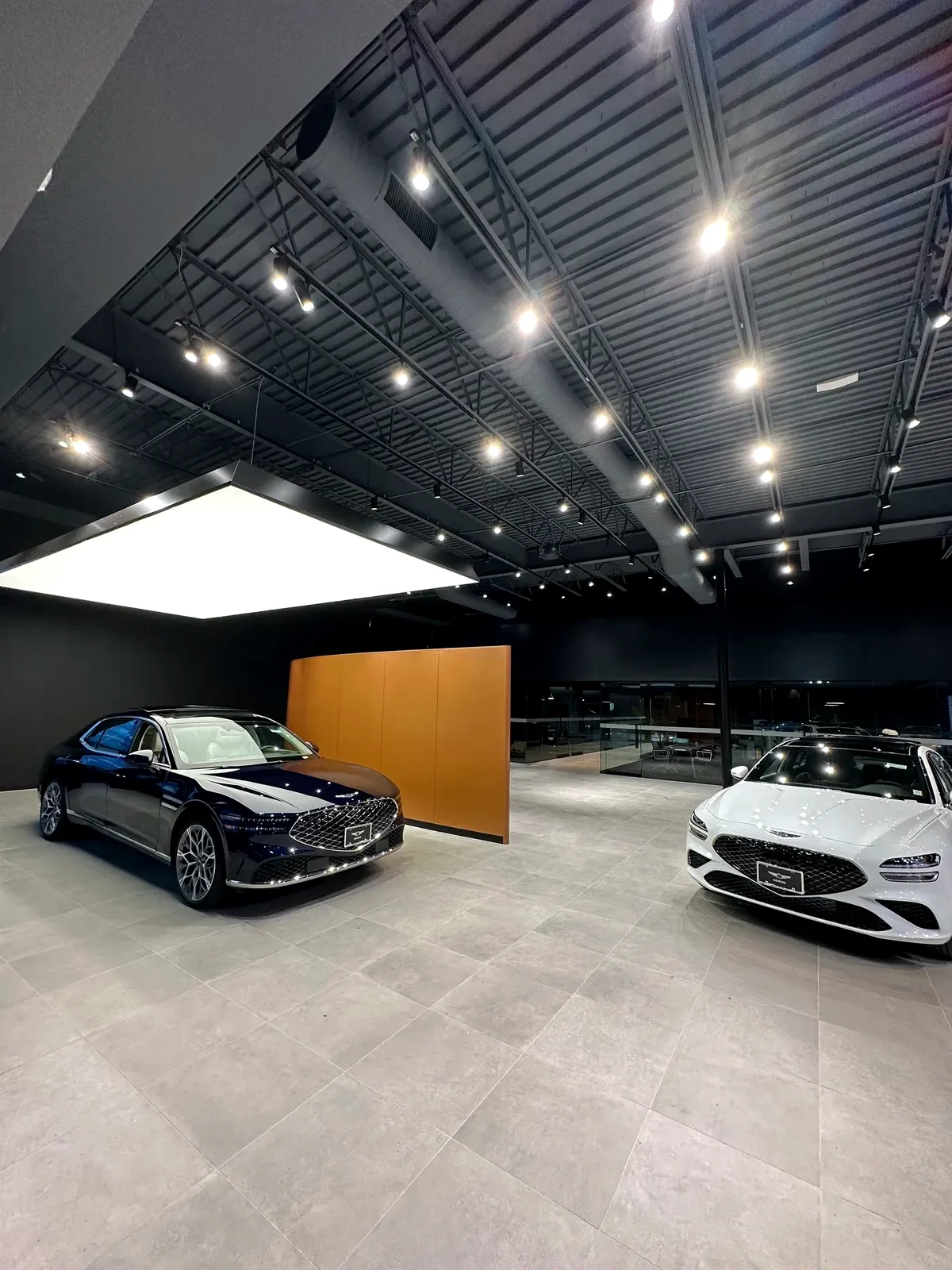
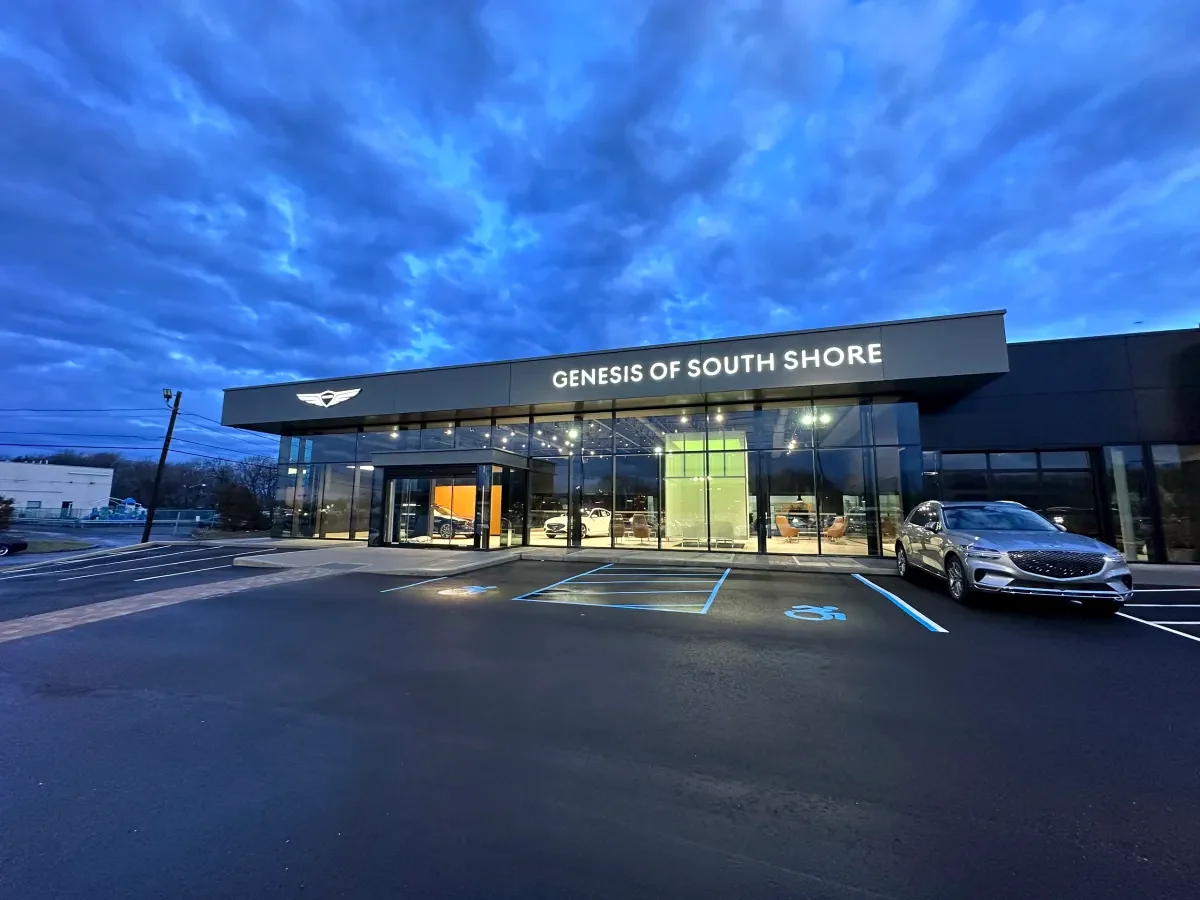
Automotive dealerships and showrooms need light that supports vehicle presentation, color appearance, glossy surfaces, customer comfort and strong visual hierarchy from the exterior approach through the sales floor. Creative Lighting’s automotive work is especially useful for projects where lighting has to support both the merchandise and the architecture.
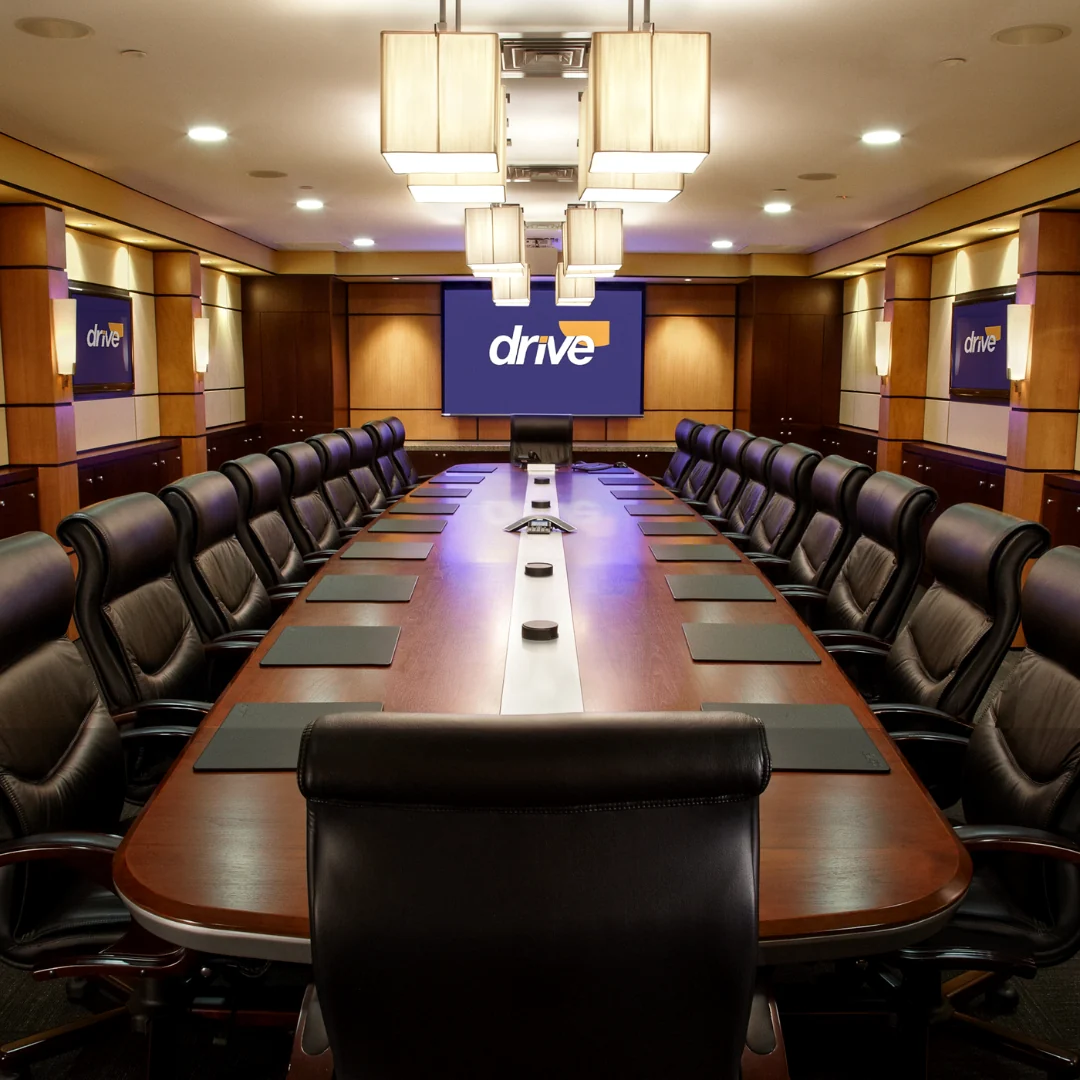
Offices and professional environments benefit from balanced ambient light, appropriate task lighting, careful glare management and controls that match occupancy. Executive spaces may also use linear or architectural lighting to create a more refined visual identity without compromising everyday function.
Warehouses and industrial facilities introduce high mounting heights, aisles, racking, work zones and maintenance concerns. Visit our warehouse and industrial LED lighting page for deeper application guidance.
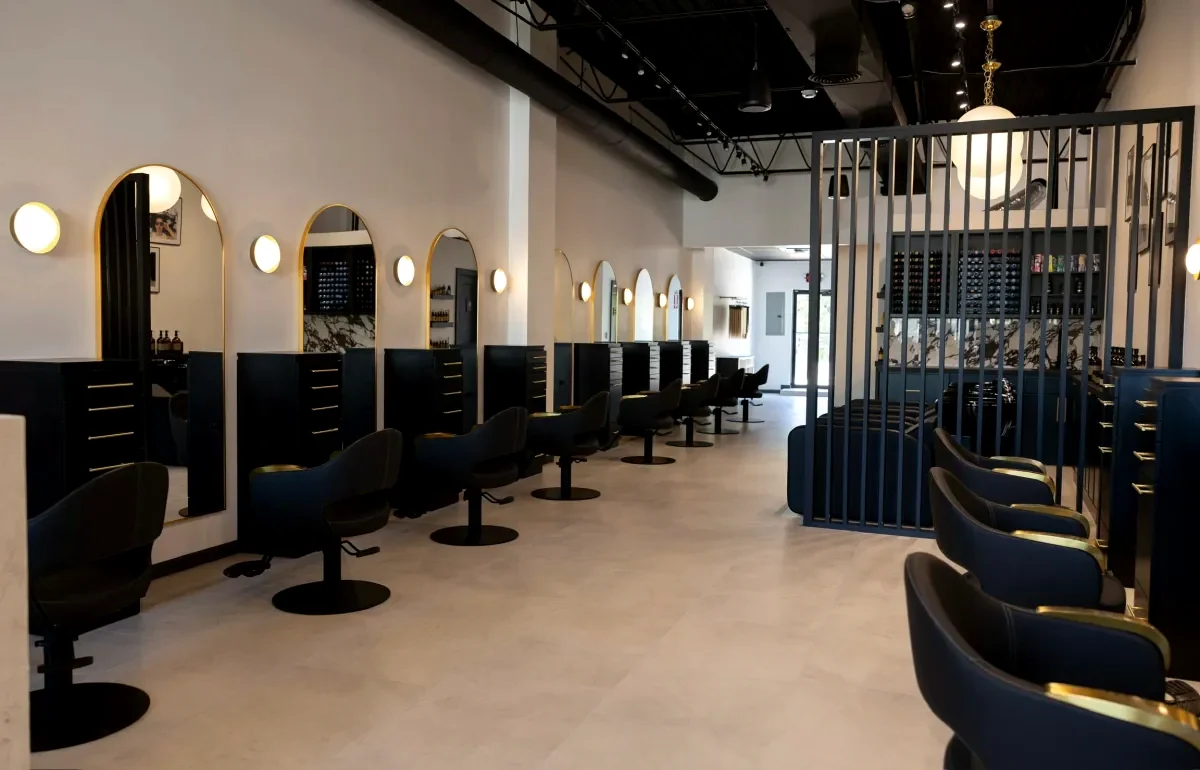
Retail, hospitality, salons and restaurants often need layered lighting. Ambient illumination establishes the baseline, while accent, display and architectural lighting help direct attention and shape the atmosphere. Color quality matters because people, products and finishes must look intentional rather than strangely transformed under the lights.
Parking lots and exterior commercial sites require distribution, boundary awareness, pedestrian visibility, pole and mounting review, controls and weather exposure planning. Our parking lot LED lighting page addresses this application in more depth.
Sports facilities introduce another performance category involving court or field geometry, aiming, mounting heights, glare, uniformity and activity level. Explore our sports facility LED lighting hub for dedicated sports-lighting guidance.
Use the Numbers to Test the Design, Not to Replace Judgment
Photometric information can help predict how a proposed luminaire and layout will distribute light across a project before equipment is installed.
In a commercial lighting project, photometric calculations can support decisions about fixture quantity, spacing, mounting height, beam distribution and expected illumination on work planes, floors, exterior pavement or other relevant surfaces. They are particularly useful when a project has large dimensions, higher mounting conditions, exterior areas, sports applications, warehouses, strict coverage expectations or a need to compare alternate fixture layouts.
But a photometric report is not a substitute for understanding the site. Reflectance, obstructions, merchandising, equipment, rack locations, furniture, window conditions and actual mounting points can all change how a real environment behaves. The most useful design process combines calculations with verified field information and a clear statement of what the business needs the lighting to accomplish.
Creative Lighting can help organize fixture and layout decisions using project-specific information rather than promising one universal foot-candle number for every business. Illuminating Engineering Society resources provide extensive standards and recommended practices for lighting calculations and applications, while the U.S. Department of Energy emphasizes the importance of complete luminaire and controls performance when evaluating LED systems.
What a Design Review May Consider
- Fixture photometric files
- Mounting heights
- Room or site dimensions
- Target work planes
- Distribution patterns
- Spacing and aiming
- Average illumination
- Minimum conditions
- Uniformity
- Glare and spill light
- Surface reflectance
- Control zones
Sometimes the Existing Layout Deserves to Retire With the Old Lamps
Replacing legacy lighting with LED can be straightforward, but copying every old fixture location is not automatically good design.
A retrofit may be the right answer when the existing fixture placement and distribution already suit the space, the housings are appropriate and the main objective is to modernize the light source, reduce maintenance or improve efficiency. In other buildings, the old lighting pattern may have been a compromise from the beginning. New technology creates an opportunity to reconsider fixture count, optics, spacing, controls and even the way the room is visually organized.
Creative Lighting can help compare an LED retrofit with full fixture replacement or a revised layout. The decision should account for the condition of the existing equipment, electrical compatibility, access, mounting, desired appearance, project schedule and the performance available from current luminaires.
That is particularly important in older warehouses, offices, dealerships and retail spaces where years of spot repairs can leave a mixture of fixture types, lamp colors and output levels. A design-led upgrade can simplify that visual noise and create a more consistent system rather than perpetuating it in LED.
Common Signs a Redesign Deserves Consideration
- Persistent dark zones
- Harsh hot spots or glare
- Too many fixture types
- Poor aisle or rack coverage
- Showroom reflections
- Inconsistent color
- Changed room use
- New ceilings or partitions
- Controls being added
- Maintenance access problems
A Modern LED Design Should Decide When the Light Is Needed, Too
LED sources are naturally compatible with many control strategies, making controls part of the design conversation rather than a separate gadget list.
Commercial facilities may benefit from occupancy sensing, scheduling, daylight-responsive dimming, local zoning, high-end trim, scene control or networked lighting controls depending on the application. A warehouse may reduce output in rarely occupied areas. An office may use daylight response near windows and occupancy control in meeting rooms. Hospitality and customer-facing spaces may use scenes or dimming to change atmosphere through the day. Exterior sites may coordinate photocells, schedules or other strategies so lighting is not operating at full output when conditions do not require it.
The U.S. Department of Energy notes that LED systems are readily integrated with sensors and controls and that controls can add energy savings by delivering light when and where it is needed. Those benefits depend on commissioning and usability. An elaborate control system that the facility cannot understand or maintain is not a design victory.
Creative Lighting can help customers consider controls in the context of fixture compatibility, zoning, occupancy patterns and project goals. The control approach should support the building’s operation, not force employees to become full-time lighting programmers.
Commercial Lighting Design Support From Plainview to Naples and Beyond
Creative Lighting’s home base is Plainview, New York. Long Island remains the strongest local market signal, while Florida and nationwide commercial projects are deliberate growth markets.
Long Island & New York
Creative Lighting supports commercial lighting design across Long Island, including Nassau County and Suffolk County, as well as broader New York project opportunities. Local customers can call (516) 741-6333, while the toll-free (888) 614-1688 is the primary number across this page.
Long Island work can include offices, dealerships, warehouses, industrial spaces, retail, schools, hospitality, parking areas, sports facilities and other commercial environments. Our Plainview location anchors that market and gives the page a real geographic foundation rather than generic statewide copy.
Naples & Southwest Florida
Creative Lighting also supports commercial LED lighting projects in Florida, with Naples and Southwest Florida emphasized as priority markets. That can include design and product guidance for hospitality, automotive, retail, office, industrial, exterior, sports and multi-site commercial properties.
Florida project support does not imply a separate Naples office. Creative Lighting remains based in Plainview, New York and works with customers and project teams on Florida and nationwide opportunities through the appropriate project process.
A Lighting Design Is Only Useful If the Project Team Can Build It
Commercial projects involve owners, facility managers, electricians, contractors, architects, purchasing teams and sometimes multiple locations. The lighting plan has to communicate across those groups.
Creative Lighting can support the product and lighting-design side of the project while coordinating relevant information with the customer’s installation professionals. That may include fixture schedules, cut sheets, photometric files, control information, mounting requirements, substitutions, product availability and other documentation appropriate to the scope.
For existing facilities, field verification matters. Drawings may not reflect decades of renovations. Fixture counts change. Circuiting is not always obvious. Equipment or shelving can be moved. A practical design process acknowledges those conditions and leaves room for confirmed site information before final purchasing and installation decisions.
Who We Can Coordinate With
- Business owners
- Facility managers
- Electrical contractors
- General contractors
- Architects/design teams
- Property managers
- Purchasing departments
- Multi-site operators
Design Guidance Backed by Decades of Commercial Lighting Work
Creative Lighting Solutions / CLF Sales Inc. has roots dating to 1965, and the commercial lighting portfolio spans a wide range of business environments.
Our project approach combines lighting product knowledge with practical commercial application. The goal is not to force one manufacturer, one fixture shape or one design formula onto every property. It is to understand the building and recommend a system that makes sense for the customer, the project team and the operating environment.
That can be especially valuable when a customer has conflicting priorities. A fixture may offer excellent efficiency but the wrong distribution. A visually refined product may have the wrong lead time for the project schedule. A control strategy may look strong on paper but be too complicated for the facility. Lighting design is the process of resolving those tradeoffs before installation makes them expensive.
For a broader view of applications and product support, visit Commercial LED Lighting. For an older facility, see LED Lighting Retrofits. For exterior projects, continue to Parking Lot LED Lighting.
Questions Owners and Project Teams Ask Before They Commit
What is commercial LED lighting design?
Commercial LED lighting design is the process of planning fixtures, layout, light distribution, color characteristics, controls and related system decisions around the requirements of a commercial space. The objective is to create useful, comfortable and maintainable illumination for the building rather than simply replacing lamps or choosing fixtures from a catalog.
Does Creative Lighting create photometric lighting layouts?
Creative Lighting can support commercial projects with layout and photometric information when appropriate to the scope. Photometric data can help evaluate fixture spacing, distribution and expected illumination, especially for warehouses, parking areas, sports facilities and larger commercial environments. Final project requirements may also involve architects, engineers, electricians or other licensed professionals depending on jurisdiction and scope.
How do you determine how many LED fixtures a commercial space needs?
Fixture quantity depends on the dimensions, mounting height, fixture output and optics, desired illumination, surface conditions, obstructions and how the space is used. A simple one-for-one replacement count can work in some retrofits, but it should not be assumed when the existing layout has performance problems.
Can you redesign an existing lighting system instead of doing a one-for-one retrofit?
Yes. A redesign may be appropriate when the existing layout creates dark zones, glare, poor uniformity, too many fixture types or maintenance problems, or when the use of the building has changed. Creative Lighting can help compare retrofit, full fixture replacement and revised-layout options.
What color temperature is best for commercial LED lighting?
There is no single best color temperature for every commercial property. The right choice depends on the environment, finishes, visual goals and tasks. Offices, dealerships, warehouses, restaurants, salons and hospitality spaces can legitimately use different color strategies. Consistency within the project is usually more important than chasing one universal number.
What role does CRI or color rendering play in commercial lighting?
Color rendering describes aspects of how colors appear under a light source. It can be important where customers or employees need to evaluate products, finishes, skin tones, food, automotive paint or other visually sensitive materials. Creative Lighting considers color quality in relation to the actual application and available products.
Can commercial LED lighting be designed with occupancy sensors and dimming?
Yes. Many LED systems can integrate occupancy sensing, scheduling, daylight response, dimming, zoning or networked controls. The appropriate strategy depends on the space and operating pattern. Controls should be selected with compatible luminaires and a commissioning plan that the facility can actually use.
Does Creative Lighting work with contractors and electricians?
Yes. Creative Lighting can coordinate lighting product and design information with the customer’s electrical contractor, general contractor, architect, facility manager or other project professionals. Installation and code responsibilities remain with the appropriate licensed professionals for the project.
Does Creative Lighting provide lighting design in Long Island and New York?
Yes. Creative Lighting is based at 23 East Mall in Plainview, New York and supports commercial lighting projects across Long Island, including Nassau County and Suffolk County, along with broader New York opportunities. Long Island customers can call (516) 741-6333, while the primary toll-free project number is (888) 614-1688.
Does Creative Lighting support commercial lighting design in Naples, Florida?
Creative Lighting supports Florida commercial projects, including Naples and Southwest Florida, as part of its broader project reach. The company remains based in Plainview, New York and does not represent a separate Naples office. Florida and nationwide customers can call (888) 614-1688.
Are PSEG Long Island commercial lighting rebates available in 2026?
PSEG Long Island states that commercial lighting rebates were retired effective December 1, 2025. Other business energy-efficiency programs may still be available, so customers should review current PSEG Long Island information for their specific project rather than assuming an LED lighting rebate applies.
What should I send before a commercial lighting design review?
Useful information includes the project address, building type, dimensions or square footage, ceiling or pole heights, existing fixture types, operating hours, photographs, known lighting problems and available drawings. If the project is a renovation or new construction job, plans, reflected ceiling plans, equipment layouts or exterior site plans can help define the next step.
You Do Not Need a Fixture Schedule Before You Call
Some of the best lighting projects start with a very ordinary sentence: “This space is too dark,” “The showroom does not look right,” “We are tired of replacing these lamps,” or “We are renovating and do not want to copy the old lighting.” Those are design problems worth solving.
Creative Lighting can review where the project stands and help identify the next useful decision. A customer with plans and specifications may need product review, alternate fixtures or photometric support. A customer with an older facility may need an audit of the current system and a comparison of retrofit and redesign options. A multi-site business may need a repeatable lighting standard before rolling changes across several properties.
The most useful first step is to bring the real project information. From there, lighting can be designed around the building and business rather than around whatever fixture happens to be easiest to sell that week.
Helpful Information to Send
- Project city and state
- Building type
- Floor or site plans
- Ceiling/pole heights
- Existing fixture photos
- Current fixture counts
- Operating hours
- Known problem areas
- Control requirements
- Project schedule
Design the Lighting Before the Building Has to Live With It.
Talk with Creative Lighting about a new commercial lighting system, retrofit, renovation, photometric layout, controls strategy or multi-location rollout. Long Island and New York remain our home-base market, with Naples, Southwest Florida and nationwide project support built into the same commercial lighting program.
Creative Lighting Solutions / CLF Sales Inc. • 23 East Mall, Plainview, NY 11803 • Serving commercial projects in New York, Florida and nationwide.